
Pipeline Overview
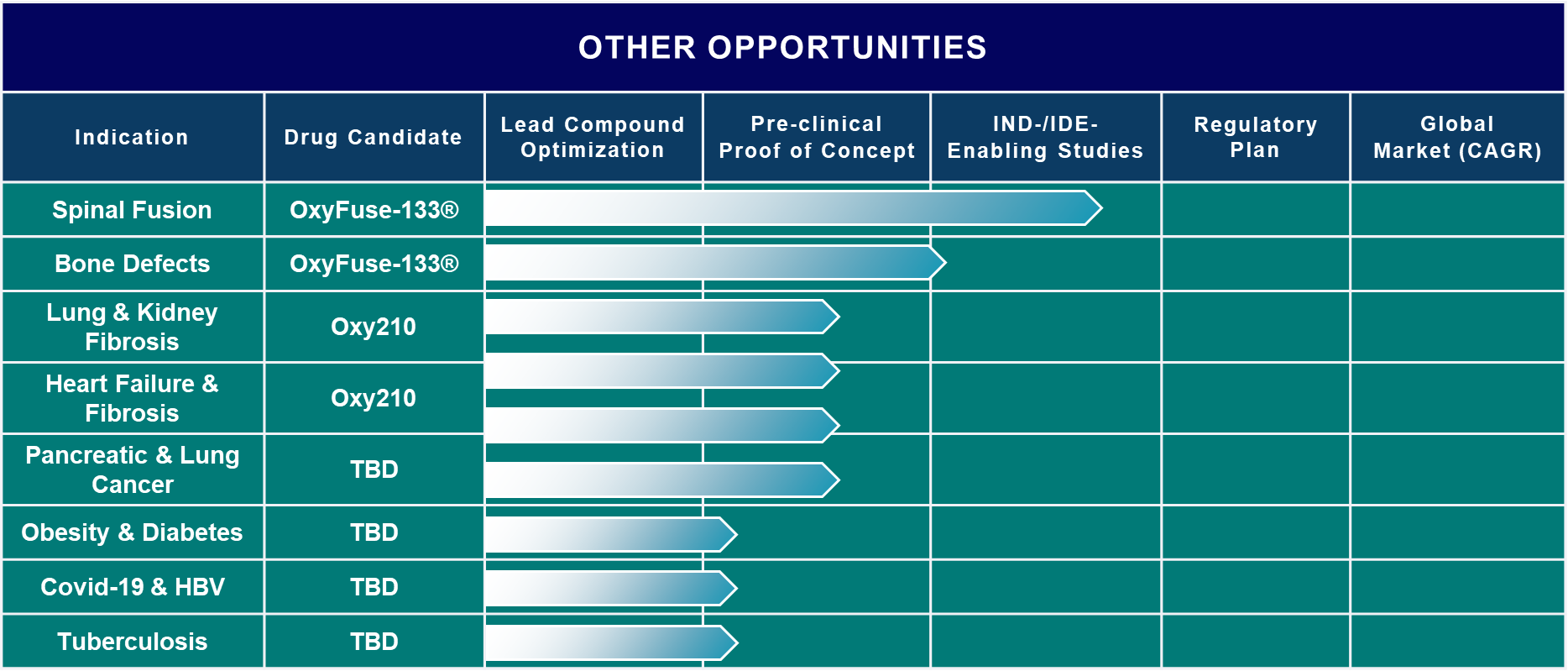
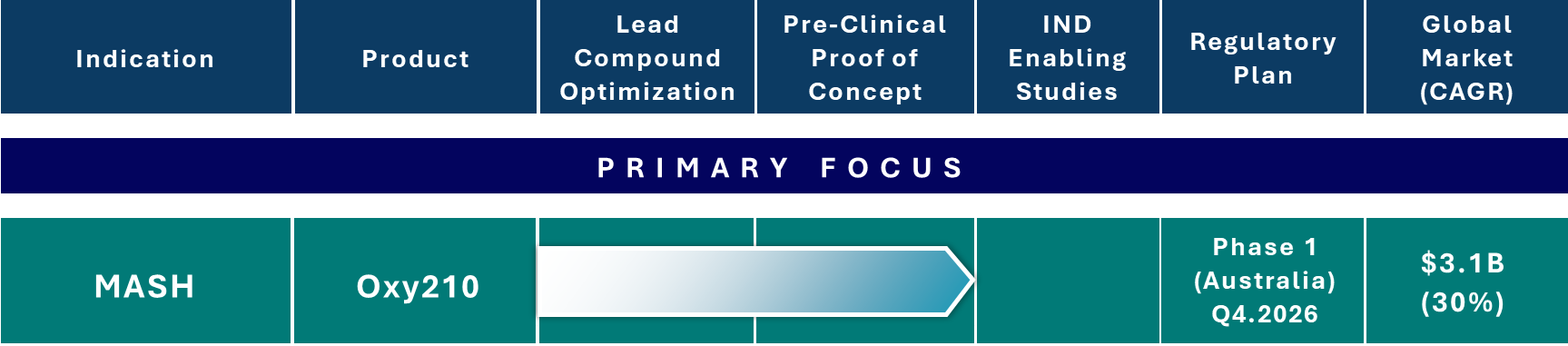
Leveraging its platform technology, Oxysterol Therapeutics®, MAX BioPharma, together with global collaborators, continues to identify semi-synthetic oxysterol analogs with potential as drug candidates for treating several debilitating and fatal disorders. These oxysterols target cellular mechanisms that are drivers of human disease. Our oxysterol candidates were handpicked for superior efficacy and favorable drug-like pharmacokinetic and safety profiles. Our current lead is Oxysterol Oxy210, an orally bioavailable drug-like oxysterol with robust antifibrotic and anti-inflammatory properties, that is being developed for treatment of metabolic dysfunction-associated steatohepatitis (MASH), formerly known as non-alcoholic steatohepatitis (NASH) and associated metabolic disorders, including atherosclerosis, and systemic chronic inflammation. Other opportunities lie with oxysterol-based molecules that display anti-inflammatory, anti-cancer and anti-viral properties.
Primary Focus
Other Opportunities
Fibrosis
Lung & Kidney Fibrosis

Fibrosis
Oxy210 shows promise in cellular models of lung and kidney fibrosis. Through collaborations with outside expert scientists, we are examining the potential of Oxy210 for treating other fibrotic disorders, including idiopathic pulmonary fibrosis (IPF).
Chronic Inflammation
Inflammaging , Obesity


Chronic Inflammation
Chronic inflammation is an underlying driver of many human diseases, including cardiovascular disease, metabolic dysfunction-associated steatohepatitis (MASH), psoriasis, arthritis, cystic fibrosis, and others. With increasing age, low grade inflammation in many tissues and organs may become chronic and non-resolving, a problem sometimes referred to as “inflammaging”. Anti-inflammatory oxysterols may be a safe and affordable solution to this problem.
Cardiovascular Disease
Atherosclerosis


Atherosclerosis
Oxy210, an orally bioavailable oxysterol-based drug candidate that inhibits liver inflammation and fibrosis, also inhibits atherosclerosis through its anti-inflammatory and cholesterol-lowering properties.
Oncology
Pancreatic & Lung Cancer


Oncology
Some of MAX BioPharma’s oxysterol-drug candidates show promise in targeting cancer, including lung and pancreatic cancer. Through collaborations with outside expert scientists, we are examining the potential of these oxysterols for targeting tumors as well as inhibiting metastasis.
Orthopedics
Spinal Fusion, Bone repair, Fracture Healing

Orthopedic
Osteogenic oxysterols could provide a safe and effective alternative to bone graft materials currently in use to stimulate spinal fusion, improve bone fracture healing, and regenerate bone in trauma-induced bone defects.
Microbial infections
Tuberculosis, Covid- 19, HBV

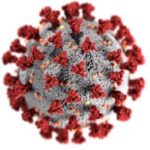
Microbial infections
Oxysterols are known to affect bacterial and viral infections, including tuberculosis (TB), hepatitis B virus (HBV), and coronaviruses, such as SARS-CoV-2. Through collaborations with outside expert scientists, we strive to demonstrate the potential of these oxysterols for the treatment of bacterial and viral diseases that may also be resistant to current standards of treatment.